Patek Philippe Watches
Patek Philippe is a Geneva watch manufacture founded in 1839 and one of the few major Swiss watch companies still owned by a family. It is known above all for complicated mechanical watches – perpetual calendars, chronographs, minute repeaters and astronomical displays – and for classic collections such as the Calatrava and the Nautilus.
Since 1932 the company has belonged to the Stern family. Thierry Stern, the fourth generation of the family to run it, has been president since 2009. Patek Philippe makes its own movements and produces a relatively small number of watches each year, which it sells only through authorised retailers and its own salons.
History of Patek Philippe
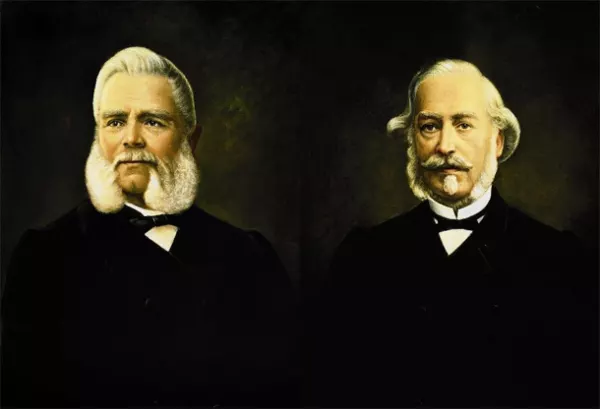 The story begins in Geneva in 1839, when Antoine Norbert de Patek, a Polish émigré who had settled in Switzerland, and the watchmaker François Czapek founded Patek, Czapek & Co. The partnership ended in 1845. The previous year Patek had met the French watchmaker Jean Adrien Philippe at an industrial exhibition in Paris; Philippe had invented a system for winding and setting a watch with the crown instead of a separate key, and in 1845 he joined Patek in Geneva.
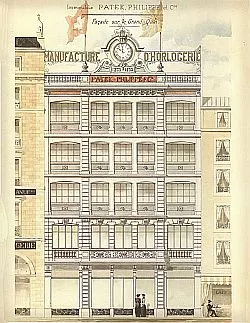 In 1851 the company took the name Patek Philippe & Co. That year it exhibited at the Great Exhibition in London, where Queen Victoria acquired one of its watches, giving the young firm international recognition. In 1868 Patek Philippe made a wristwatch for Countess Koscowicz of Hungary, which the company regards as the first Swiss wristwatch.
During the economic crisis of the early 1930s the company needed investment, and in 1932 it was bought by Charles and Jean Stern, owners of a Geneva dial-making firm that had supplied it for years. The family still owns Patek Philippe today: Henri Stern, his son Philippe Stern and grandson Thierry Stern have led it in turn.
The great complications
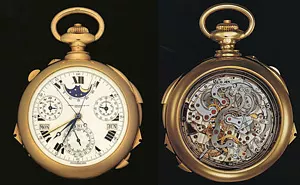 In the 1920s two American collectors, the New York banker Henry Graves Jr. and the car maker James Ward Packard, competed to own the most complicated watch in the world, and both turned to Patek Philippe. In 1927 Packard received an astronomical pocket watch showing the night sky over his home town of Warren, Ohio. Graves answered with a commission that took three years to design and five years to build. Delivered in 1933, the Henry Graves Supercomplication has 24 complications and remained the most complicated watch in the world made without the aid of computers for more than half a century.
In 2014 the Supercomplication sold at auction in Geneva for 23.2 million Swiss francs, at the time a record for any watch. In 2019 a unique steel Grandmaster Chime, ref. 6300A, made for the Only Watch charity auction, sold for 31 million Swiss francs, setting a world auction record for a watch.
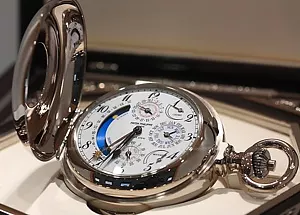 The company has continued to build large complicated watches for its anniversaries: the Calibre 89 pocket watch (1989) with 33 complications for its 150th anniversary, the Star Calibre 2000 pocket watch (2000) and the Grandmaster Chime wristwatch (2014), a double-faced watch with 20 complications made for its 175th anniversary.
Patek Philippe technology and quality standards
- In-house movements – Patek Philippe designs and makes its movements itself, from simple time-only calibres to grand complications, at its manufacture in Plan-les-Ouates near Geneva.
- Gyromax balance – a balance wheel patented by Patek Philippe in 1949 and 1951, regulated with small adjustable weights on its rim rather than a traditional regulator index.
- Silicon components – Patek Philippe introduced its first component made of Silinvar, a silicon-based material, in 2005: an escape wheel. The Spiromax balance spring followed in 2006. Silinvar is non-magnetic and helps improve the reliability and precision of the movement.
- Patek Philippe Seal – introduced in 2009, the company’s own quality standard applies to the entire finished watch rather than the movement alone, and also covers long-term servicing. In 2024 Patek Philippe tightened its rate requirements: watches fitted with a Spiromax or a traditional Breguet balance spring, as well as tourbillons, must keep time within −1/+2 seconds a day.
Main Patek Philippe collections
- Calatrava – introduced in 1932, the brand’s classic round dress watch and the clearest expression of its traditional style.
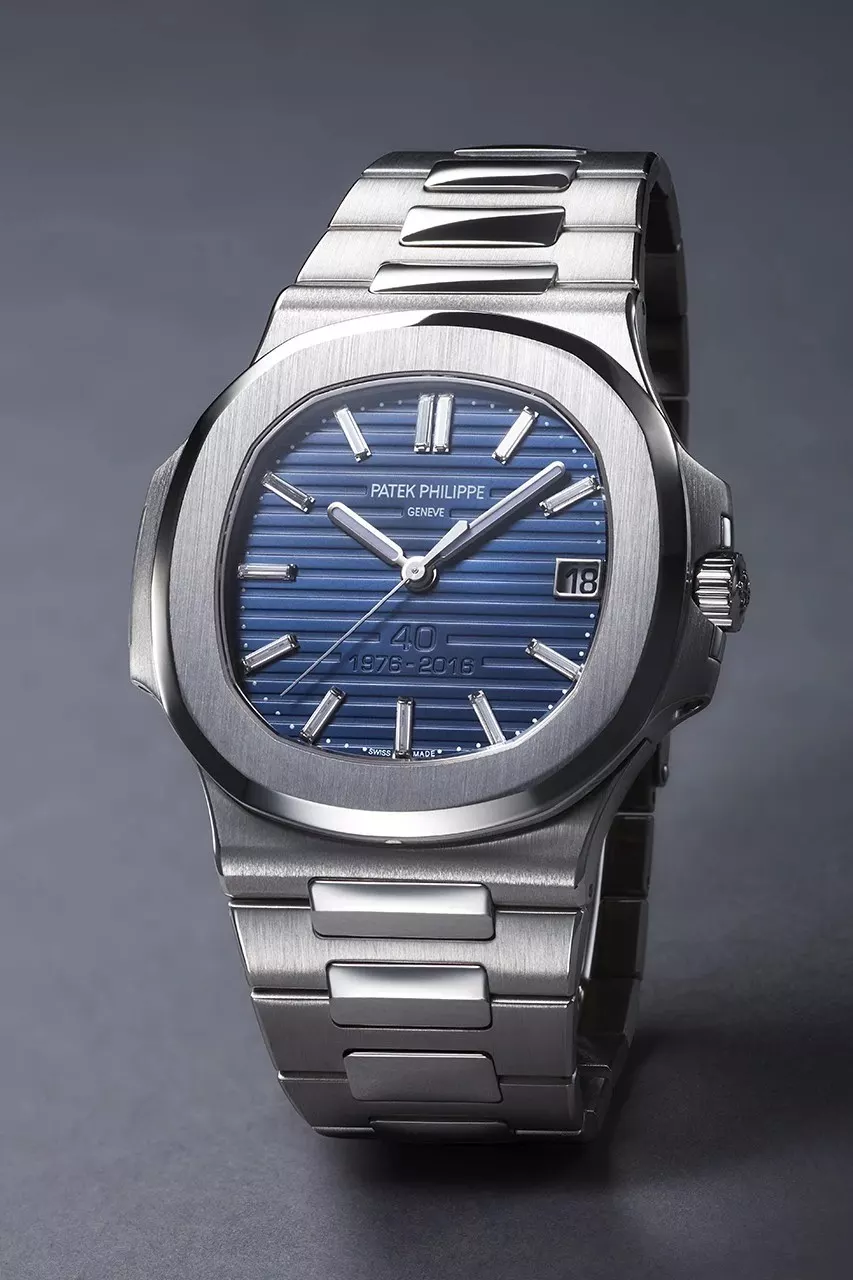
- Nautilus – launched in 1976 as a luxury steel sports watch designed by Gérald Genta, with its distinctive porthole-shaped case and integrated bracelet. The collection marks its 50th anniversary in 2026.
- Aquanaut – a more casual sports line introduced in 1997, recognisable by its rounded octagonal case and “tropical” composite strap.
- Cubitus – a square sports collection launched in 2024; in 2026 it gained a skeleton perpetual calendar, ref. 5840P-001.
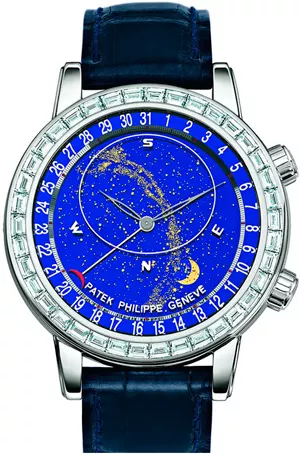
- Complications and Grand Complications – annual calendars, world timers and chronographs, then perpetual calendars, minute repeaters, tourbillons and sky charts.
- Golden Ellipse – a slim dress watch first presented in 1968, with a case based on the golden ratio.
- Twenty~4 – a collection designed for women, introduced in 1999 and now offered with both quartz and automatic movements.
The Patek Philippe Museum
In 2001 the company opened the Patek Philippe Museum in Geneva. It holds two collections: one devoted to the brand’s own watches from 1839 onwards, including pieces made for Queen Victoria and many grand complications, and an antique collection covering European watchmaking and enamel work from the 16th to the 19th century. The museum is open to the public.
Why Patek Philippe watches are hard to buy
 Patek Philippe produces its watches in limited quantities, and demand for certain models, particularly sought-after Nautilus and Aquanaut references, can exceed availability at authorised retailers. As a result, some references can be difficult to obtain and may trade above retail price on the secondary market. Availability and secondary-market premiums vary considerably by reference, while many dress watches and complicated models are more readily available. The brand’s well-known advertising line – “You never actually own a Patek Philippe. You merely look after it for the next generation” – reflects how it presents its watches: as objects built to be serviced and passed on.
Patek Philippe FAQ
Who owns Patek Philippe?
The Stern family, which bought the company in 1932. Patek Philippe is independent and not part of any watch group. Thierry Stern has been president since 2009.
Where are Patek Philippe watches made?
In Switzerland. The company is based in Geneva, and its main manufacture is in Plan-les-Ouates on the outskirts of the city.
Which Patek Philippe is the most famous?
The Calatrava represents Patek Philippe’s traditional dress-watch style, while the Nautilus is its best-known sports collection. Among historical pieces, the Henry Graves Supercomplication is one of the manufacture’s defining watches.
Is a Patek Philippe a good investment?
Some Patek Philippe models have held their value well or traded above retail, but this varies greatly by model and market conditions, and secondary-market prices can fall as well as rise. A Patek Philippe should be bought as a watch to wear, not as a guaranteed financial investment.