Rolex Watches
Rolex is one of the world’s most recognised Swiss watch brands. For more than a century the Geneva manufacture has built its reputation around several principles that still define its watches today: waterproof Oyster cases, precise self-winding movements and designs that evolve gradually rather than change with every generation.
Unlike most luxury brands, Rolex is not part of a listed group. It is owned by the Hans Wilsdorf Foundation, a private foundation, which lets the company plan in decades rather than quarters. It makes its own movements, cases, bracelets and dials, and even casts its own gold alloys in-house.
History of Rolex
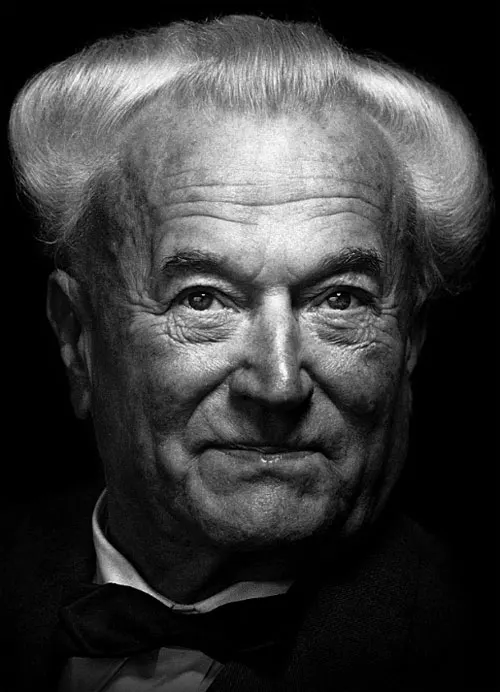 The story begins in London in 1905, when the German-born Hans Wilsdorf and his partner Alfred Davis founded Wilsdorf & Davis to sell watches fitted with precise Swiss movements. At a time when pocket watches ruled, Wilsdorf was convinced that the future belonged to the wristwatch. In 1908 he registered the name “Rolex”: short, easy to pronounce in any language and small enough to fit on a dial. Wilsdorf later recalled that, after trying hundreds of combinations of letters, the name came to him while riding on the upper deck of a horse-drawn omnibus in London.
Precision came first. In 1910 a Rolex became the first wristwatch to receive the Swiss certificate of chronometric precision, and in 1914 the Kew Observatory in Britain awarded a Rolex a class “A” precision certificate, a distinction until then reserved for marine chronometers. After the First World War the company moved to Geneva, where its headquarters remain.
Three inventions defined the modern Rolex:
- Oyster (1926) – the first waterproof and dustproof wristwatch, built around a hermetically sealed case with a screw-down case back, bezel and winding crown. In 1927 swimmer Mercedes Gleitze wore one across the English Channel, the first of many public “testimonies”.
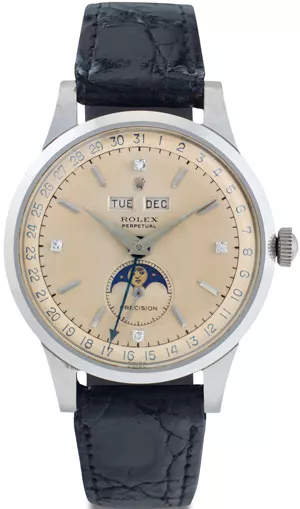
- Perpetual rotor (1931) – a self-winding mechanism with a freely rotating weight that winds the mainspring with every movement of the wrist. It is the ancestor of almost every automatic watch made today.
- Datejust (1945) – the first self-winding waterproof chronometer wristwatch to show the date in a window on the dial.
The professional watches
 In the 1950s Rolex turned its expertise in precision and water resistance into tool watches for people with demanding jobs and hobbies. The 1953 Everest expedition was equipped with Oyster Perpetual watches, and Rolex launched the Explorer later that year in the wake of the historic ascent. The Submariner, also introduced in 1953, was waterproof to 100 metres. The GMT-Master followed for airline pilots who needed two time zones, the Day-Date (1956) became the watch of presidents and business leaders, and the Cosmograph Daytona (1963) was built for racing drivers. In 1960 an experimental Rolex Deep Sea Special, strapped to the bathyscaphe Trieste, reached the bottom of the Mariana Trench and came back working.
Most of these names are still in the catalogue, refined rather than reinvented. That continuity has also helped many Rolex models maintain strong demand on the secondary market.
Rolex innovations today
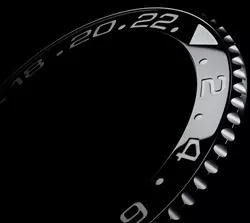 Many of the technologies used in modern Rolex watches are developed by the company itself:
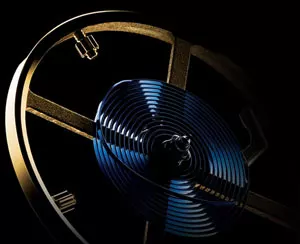
- Parachrom hairspring – a blue balance spring made from a paramagnetic alloy that is up to ten times more resistant to shocks than a traditional spring and unaffected by magnetic fields.
- Cerachrom bezel – a ceramic bezel insert that is virtually scratchproof and keeps its colour in sunlight and seawater.
- Chronergy escapement – a more efficient escapement that helps recent calibres reach a power reserve of about 70 hours.
- Superlative Chronometer – Rolex’s own certification guarantees a precision of −2/+2 seconds a day on the finished watch, stricter than the official COSC standard. In 2026 it was expanded to seven criteria: precision, waterproofness, self-winding and power reserve, tested on the finished watch, plus resistance to magnetism, reliability and durability, built in at the design and manufacturing stages. The procedures are controlled by independent Swiss organisations, and every Rolex carries a five-year international guarantee.
Main Rolex collections
The current catalogue is divided into the Oyster Perpetual family and the dress-oriented Perpetual 1908. The core models are:
- Oyster Perpetual – the purest, time-only Rolex and the entry point to the brand.
- Datejust and Day-Date – the classic dress-to-everyday models; the Day-Date is made only in precious metals.
- Submariner, Sea-Dweller and Deepsea – dive watches, from everyday to extreme depths.
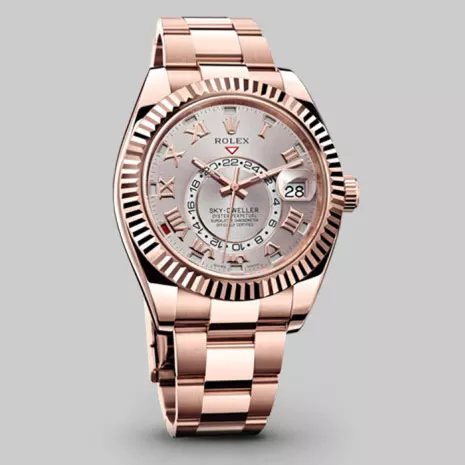
- GMT-Master II and Sky-Dweller – watches for travellers, with a second time zone or an annual calendar.
- Cosmograph Daytona – the racing chronograph and one of the most sought-after watches in the world.
- Explorer, Explorer II, Yacht-Master and Air-King – sports watches for exploration, sailing and aviation.
- Land-Dweller – an integrated-bracelet sports model introduced in 2025.
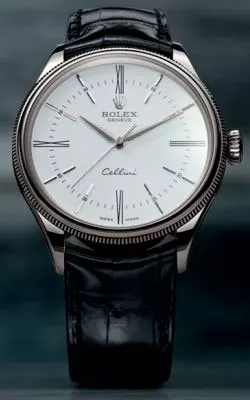
- 1908 – a slim, elegant dress watch named after the year the Rolex brand was registered.
Rolex also owns Tudor, the sister brand Hans Wilsdorf created to offer Rolex-level reliability at a lower price. Tudor watches are covered separately in our watch directory.
Why Rolex watches are hard to buy
Rolex sells new watches only through official retailers. Demand for certain models, particularly sought-after steel sports watches such as the Submariner, GMT-Master II and Daytona, can exceed what retailers have available, so buyers may face waiting periods, and some references trade above retail price on the secondary market. Others, however, can be found at or below their official price, so the situation varies considerably by model. To meet the demand for second-hand watches, Rolex runs its own Certified Pre-Owned programme through authorised dealers.
Rolex FAQ
Who owns Rolex?
Rolex is owned by the Hans Wilsdorf Foundation, a private foundation set up by the company’s founder. It has no shareholders and is not listed on any stock exchange.
Where are Rolex watches made?
In Switzerland. Rolex is headquartered in Geneva, where cases, bracelets and final assembly are handled, and makes its movements in Biel/Bienne.
Is a Rolex a good investment?
Rolex watches have historically shown strong value retention compared with much of the luxury watch market, but performance varies greatly by model and market conditions. Secondary-market prices can rise or fall, so a Rolex should not be treated as a guaranteed financial investment.
What is the cheapest Rolex?
The Oyster Perpetual is the entry point to the brand. Check the official Rolex website or an authorised retailer for current prices in your country.