TAG Heuer Watches
TAG Heuer is a Swiss watchmaker founded by Edouard Heuer in Saint-Imier in 1860. The company built its reputation on chronographs, stopwatches and precision timing, and its history is closely tied to motor racing. Today its best-known watch families include the Carrera, Monaco, Aquaracer and Formula 1.
Originally known as Heuer, the company became TAG Heuer after Techniques d'Avant-Garde acquired the watchmaker in the mid-1980s. It has belonged to the French luxury group LVMH since 1999. TAG Heuer is headquartered in La Chaux-de-Fonds, Switzerland, and has been led by CEO Antoine Pin since September 2024.
History of TAG Heuer

Edouard Heuer opened his first watchmaking workshop in Saint-Imier in 1860, when he was 20 years old. The business moved to Bienne in 1867 and increasingly specialised in instruments for measuring short intervals of time. In 1887 Heuer patented an improved oscillating pinion, a compact mechanism that couples and uncouples a chronograph from the movement. The principle proved durable and is still used in mechanical chronographs.
Precision timing became another defining part of the company. In 1916 Heuer introduced the Mikrograph, a mechanical stopwatch capable of measuring hundredths of a second. Heuer stopwatches and chronographs went on to be used for sporting events, industrial timing and dashboard instruments, establishing a technical foundation that would later connect the brand naturally with motor racing.
Jack Heuer, Carrera and motorsport
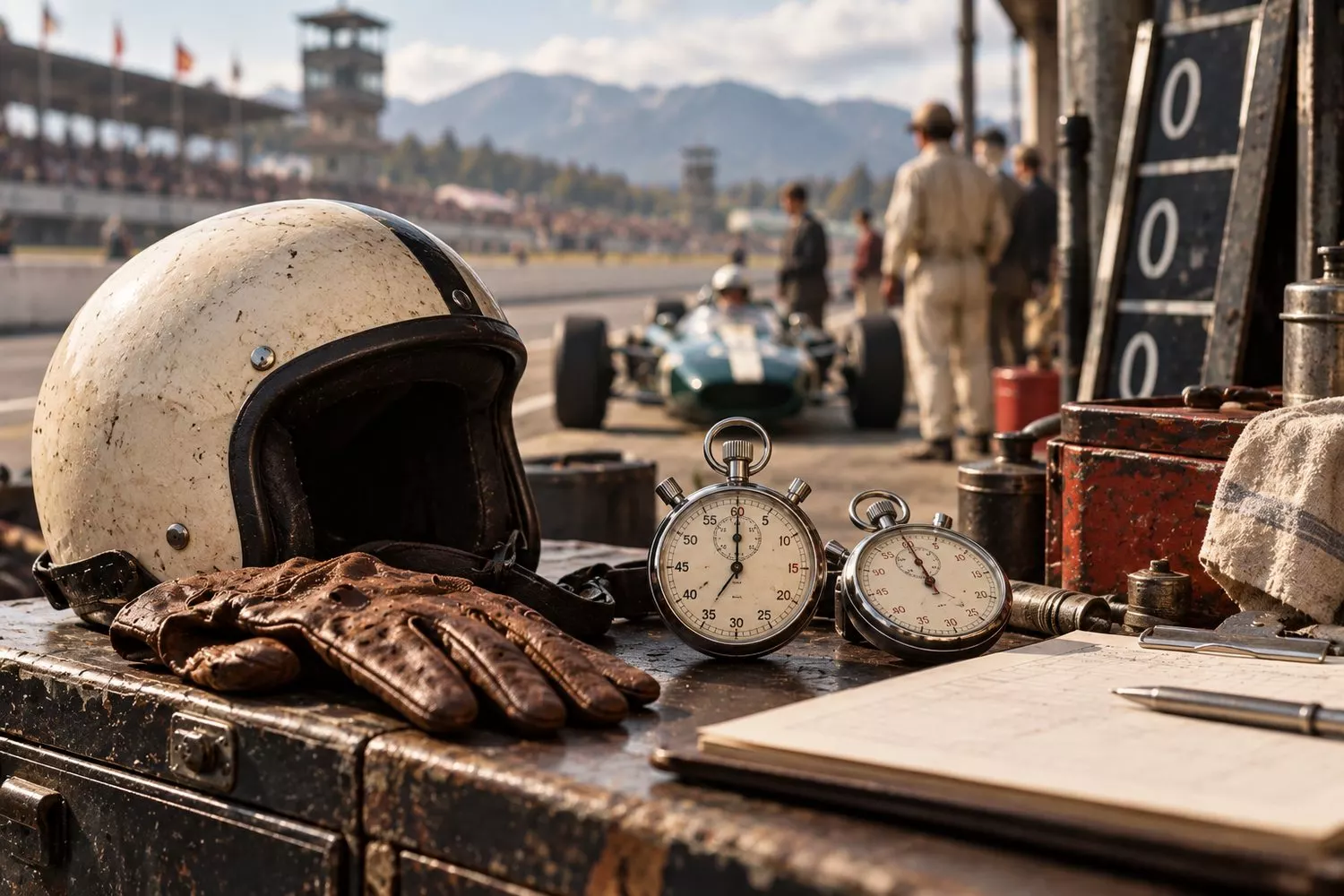
Jack Heuer, the founder's great-grandson, formally joined the family business in 1958 and became the fourth generation of the Heuer family to lead it. Under his direction the company strengthened its links with motorsport and began giving distinctive names to wrist chronographs that had previously been identified mainly by reference numbers.
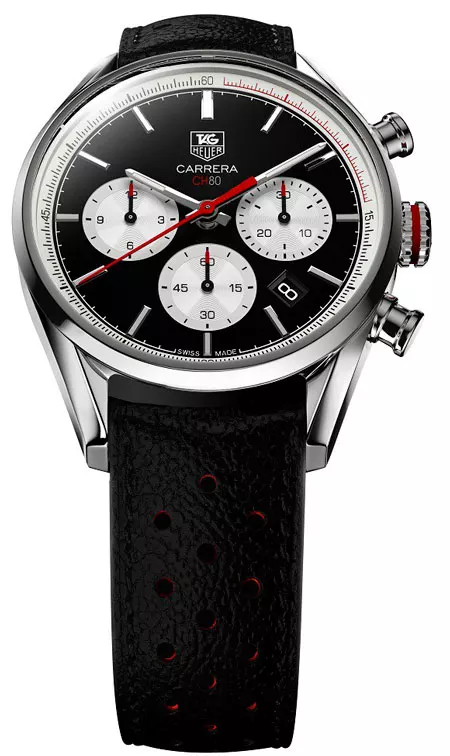
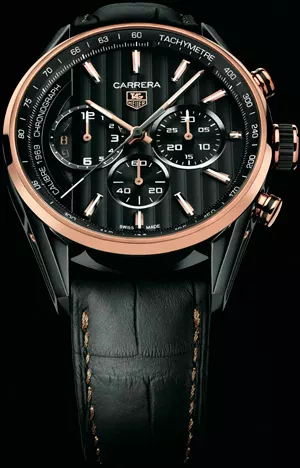
The Autavia wrist chronograph appeared in 1962, taking its name from AUTomobile and AVIAtion. In 1963 Heuer introduced the Carrera, named after the Carrera Panamericana road race in Mexico. Jack Heuer favoured a clean, highly legible dial, and the Carrera became one of the designs most closely associated with the company.
Heuer's timing instruments also travelled beyond the racetrack. On 20 February 1962, astronaut John Glenn wore a Heuer stopwatch strapped to his wrist during the Mercury-Atlas 6 mission, when he became the first American to orbit Earth.
Calibre 11 and the Monaco
During the 1960s Heuer worked with Breitling, Büren and movement specialist Dubois Dépraz on an automatic chronograph project. The resulting Calibre 11 Chronomatic reached the market in 1969. The Heuer-led partnership was the first to offer automatic chronographs across worldwide markets, while Zenith and Seiko were developing their own automatic chronographs during the same period.
Heuer used the Calibre 11 in the Autavia, Carrera and the newly introduced Monaco. The Monaco stood apart with its square case and the crown positioned on the left. Its place in popular culture was strengthened when Steve McQueen wore a Heuer Monaco while playing racing driver Michael Delaney in the 1971 film Le Mans.
From Heuer to TAG Heuer
The quartz crisis put severe pressure on the Swiss watch industry, and Jack Heuer was forced to sell the family business in 1982. On 1 January 1986, Techniques d'Avant-Garde (TAG), an engineering group with strong links to motorsport, acquired Heuer. The TAG Heuer name was adopted with the change of ownership.
The Formula 1 collection arrived in 1986 as the first watch line launched under the new TAG Heuer name. Its colourful cases and quartz movements represented a clear break with the company's traditional mechanical chronographs. In 1987 TAG Heuer introduced the S/el, short for Sports and Elegance; the collection was renamed Link in 1999.
Also in 1999, LVMH acquired TAG Heuer. Jack Heuer returned to the company in 2001 as Honorary Chairman, becoming an important link between the modern brand and the family business he had once led.
Modern TAG Heuer watchmaking
TAG Heuer combines quartz, solar and connected watches with mechanical watchmaking. Its headquarters and final assembly are in La Chaux-de-Fonds, while other Swiss production sites contribute movements, cases and dials. The company introduced the Aquaracer name in 2004 for a dive-watch family whose roots go back to Heuer's first dedicated diving watches of the late 1970s and the 2000 Series of the 1980s.
Mechanical chronographs remain central to the brand. TAG Heuer introduced the Calibre 1887 automatic chronograph movement in 2010, and current manufacture chronographs use movements from the TH20 family. In 2026 the Monaco entered a new chapter with the TH20-11, a manufacture chronograph movement developed with its crown on the left as a deliberate reference to the historic Calibre 11 layout.
The connection with motor racing is also current rather than purely historical. TAG Heuer returned as the Official Timekeeper of Formula 1 in 2025, a role it previously held from 1992 to 2003.
Main TAG Heuer collections
- Carrera – introduced in 1963 as a racing chronograph; today's collection includes chronographs, three-hand watches and high-complication models.
- Monaco – the square chronograph introduced in 1969, closely associated with Steve McQueen and the film Le Mans.
- Aquaracer – the sports and dive-watch family introduced under the Aquaracer name in 2004, with roots in Heuer diving watches from the late 1970s and early 1980s.
- Formula 1 – launched in 1986 as the first collection under the TAG Heuer name; the modern range continues the brand's direct connection with Formula 1 racing.
- Connected – TAG Heuer's smartwatch family, first introduced in 2015 and developed alongside the company's mechanical collections.
- Link – a sports-elegance collection distinguished by its characteristic bracelet, descended from the S/el line introduced in 1987 and renamed Link in 1999.
TAG Heuer FAQ
Who owns TAG Heuer?
TAG Heuer belongs to LVMH Moët Hennessy Louis Vuitton. The French luxury group acquired the Swiss watchmaker in 1999.
Where are TAG Heuer watches made?
TAG Heuer is a Swiss watchmaker headquartered in La Chaux-de-Fonds. The company operates several production sites in Switzerland; components including movements, cases and dials are produced at specialised sites, with final assembly in La Chaux-de-Fonds.
What does TAG in TAG Heuer mean?
TAG stands for Techniques d'Avant-Garde, the engineering group that acquired Heuer on 1 January 1986. The TAG Heuer name dates from that change of ownership.
How do you pronounce TAG Heuer?
TAG is pronounced as the English word "tag"; Heuer is approximately "HOY-er".
Which TAG Heuer watch is the most famous?
The Carrera and Monaco are the two historical chronographs most closely associated with TAG Heuer. The Carrera dates from 1963, while the Monaco was introduced in 1969 and became especially well known after Steve McQueen wore one in Le Mans.