Breitling Watches
Breitling is a Swiss watchmaker founded by Léon Breitling in Saint-Imier in 1884. The company developed around chronographs and precision timing instruments, later building a particularly strong connection with aviation. Its best-known watches include the Navitimer, Chronomat and Superocean, while its current catalogue ranges from mechanical chronographs and dive watches to professional electronic instruments.
Breitling SA is headquartered in Grenchen, Switzerland, and has been led by CEO Georges Kern since 2017. The company is privately held: Partners Group is its largest shareholder, while CVC and Breitling management remain invested alongside it.
History of Breitling
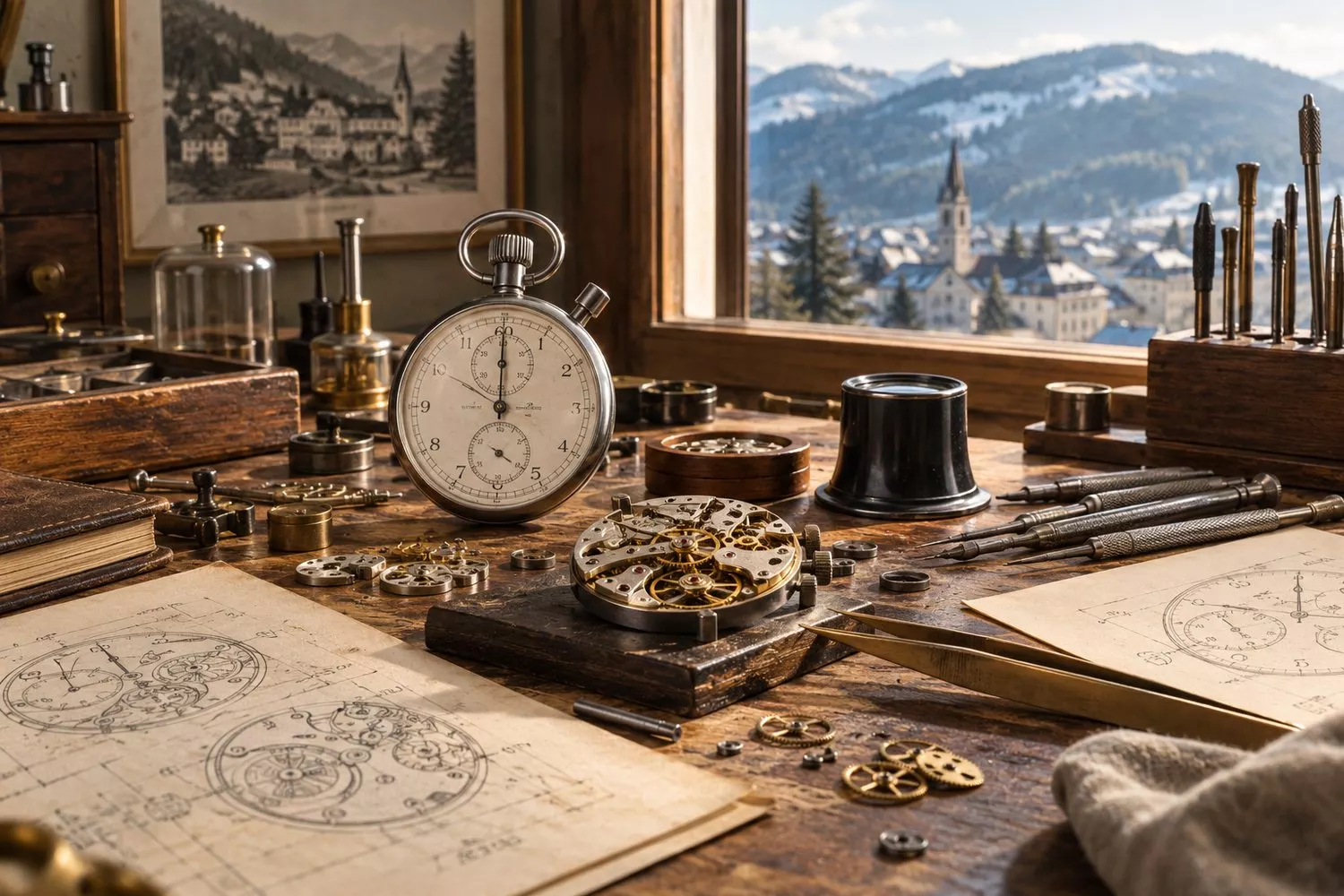
Léon Breitling opened his first workshop at Place Neuve 1 in Saint-Imier in 1884. He concentrated on chronographs, stopwatches and other instruments for measuring short intervals of time. As the business expanded, Breitling moved its operations to La Chaux-de-Fonds in 1892.
After Léon's death, his son Gaston took over the company. In 1915 Gaston Breitling created one of the early wrist chronographs with an independent pusher at 2 o'clock, separating the chronograph control from the winding crown. In 1923 Breitling refined the system so that the pusher controlled start and stop while the crown reset the chronograph, allowing successive times to be added without resetting after each measurement.
The third generation, Willy Breitling, took charge in 1932. Two years later Breitling patented a second chronograph pusher at 4 o'clock dedicated to resetting the hands to zero. The resulting arrangement – one pusher for start and stop, another for reset, with the crown between them – established the control layout that became standard for wrist chronographs.
Chronomat and aviation
Breitling's connection with aviation grew during the 1930s. In 1938 the company established the Huit Aviation department to produce cockpit instruments, and in 1939 the British Air Ministry commissioned Breitling to supply onboard chronographs for the Royal Air Force.
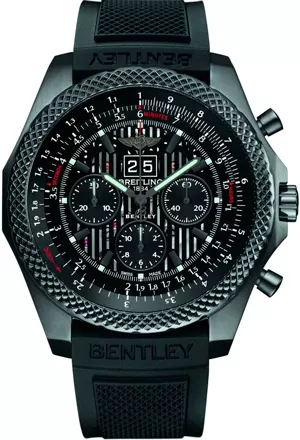
In 1940 Breitling patented a circular logarithmic slide rule for chronograph calculations. The wristwatch built around this idea appeared in 1942 as the Chronomat, its name derived from “chronograph” and “mathematics”. The rotating scale could be used for calculations useful in technical, scientific and sporting work.
The Navitimer and the golden age of flight
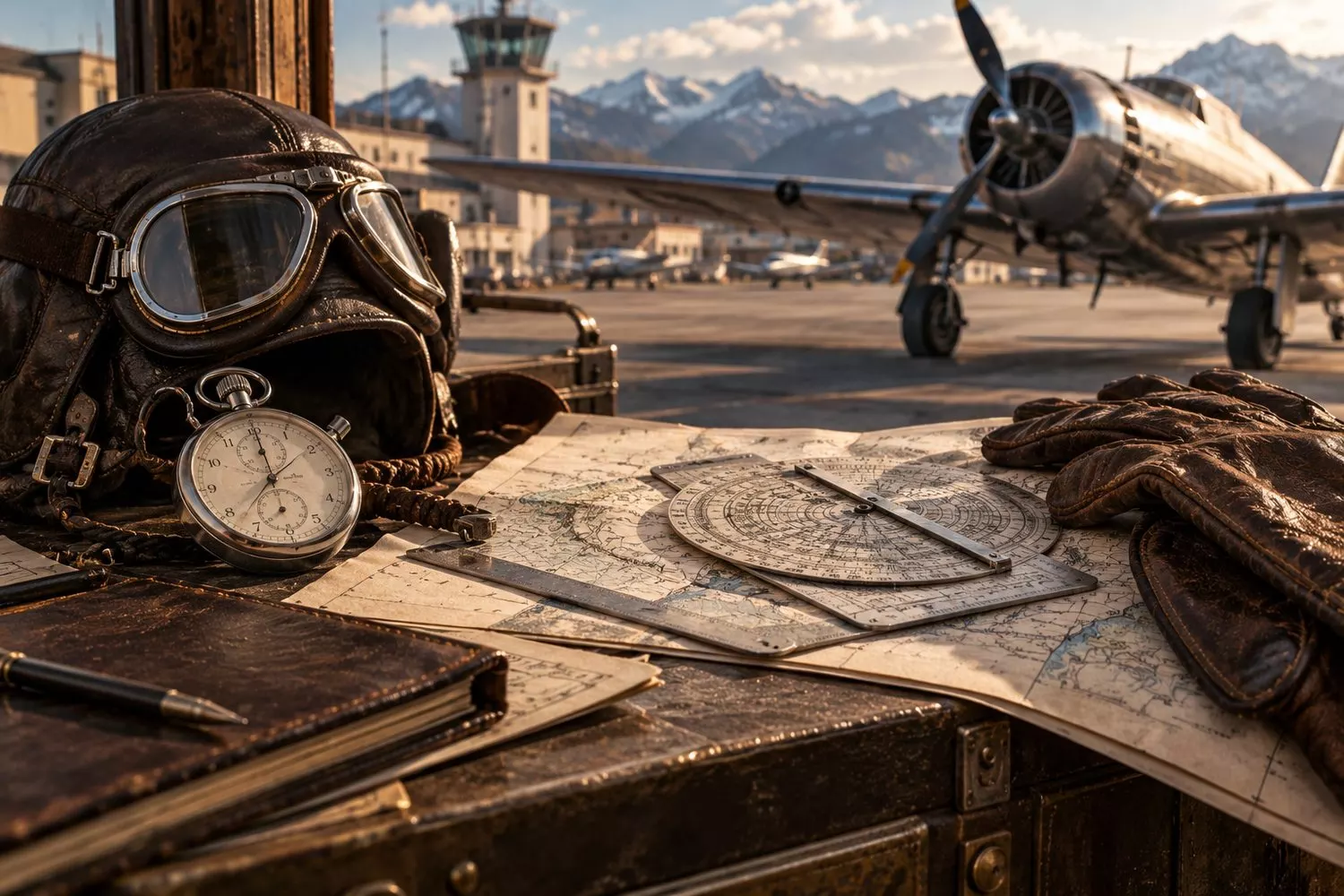
In 1952 Willy Breitling developed the Navitimer, adapting the Chronomat's circular slide rule for aviation. The watch allowed pilots to calculate values such as average speed, distance, fuel consumption and rate of climb or descent. Breitling's history records that the project was commissioned by the Aircraft Owners and Pilots Association (AOPA); two years later the association announced the design as its official timepiece.
The Navitimer also entered space history. Astronaut Scott Carpenter asked Breitling to create a version with a 24-hour display so that day and night could be distinguished in orbit. On 24 May 1962 he wore the specially modified Navitimer during the Aurora 7 mission, circling Earth three times. Breitling later offered the 24-hour model to the public as the Cosmonaute.
Breitling expanded beyond aviation during the same period. In 1957 it introduced the SuperOcean in time-only and chronograph versions for diving, and in 1964 Willy Breitling launched the Top Time as a more youthful chronograph line.
Chrono-Matic and the automatic chronograph
In the 1960s Breitling joined Heuer-Leonidas, Hamilton-Büren and movement specialist Dubois-Dépraz in the secret development programme known as Project 99. Their goal was to combine automatic winding with a chronograph. On 3 March 1969 the partners presented the Calibre 11 at simultaneous press conferences in Geneva and New York.
The resulting Chrono-Matic had its winding crown on the left and chronograph pushers on the right. Breitling, Heuer-Leonidas and Hamilton-Büren brought watches using the system to market in 1969, during the same period in which Zenith and Seiko introduced their own automatic chronograph solutions.
Ernest Schneider and the rebirth of Breitling
The quartz crisis transformed the Swiss watch industry during the 1970s. On 5 April 1979 Ernest Schneider, a pilot and the former head of the Sicura watch company, took over Breitling. Rather than rejecting quartz technology, Schneider used it for professional instruments while also preserving mechanical chronographs.
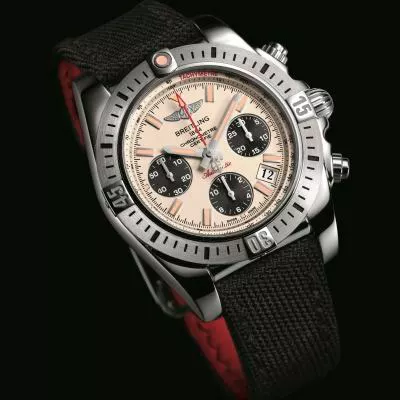
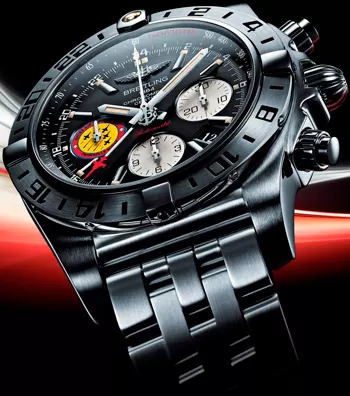
A decisive model of the new era was the Chronomat. Breitling first developed the Chronograph Frecce Tricolori for the Italian aerobatic team in 1983; the design became the basis for the Chronomat launched for Breitling's centenary in 1984. Its substantial mechanical construction, rider tabs and Rouleaux bracelet stood apart at a time when thin quartz watches dominated the market.
Breitling also developed electronic professional watches. The Aerospace appeared in 1985 with analogue and digital displays in a lightweight titanium case. The Emergency followed as a specialist rescue instrument, integrating an emergency locator transmitter into a wristwatch; the model was officially launched in 1995 with its distinctive antenna system.
Modern Breitling and manufacture movements
Breitling opened its Chronometrie in La Chaux-de-Fonds in 2001 and introduced the Breitling Manufacture Caliber 01 in 2009. The automatic chronograph movement uses a column wheel and vertical clutch and provides approximately 70 hours of power reserve. It remains the foundation of many current Breitling chronographs.
In 2017 CVC Capital Partners acquired a majority stake in Breitling and Georges Kern became CEO. Partners Group later increased its investment and became the company's largest shareholder, while CVC, management and other investors remained involved. Breitling therefore remains privately held rather than belonging to one of the large listed luxury groups.
Movement development has continued. In 2025 Breitling introduced the B31, its first manufacture three-hand automatic movement designed and developed by the company. The COSC-certified calibre provides approximately 78 hours of power reserve and is now used across several Breitling collections.
Main Breitling collections
- Navitimer – the aviation watch introduced in 1952 with a circular slide rule for flight calculations; the modern range includes chronographs, automatic three-hand watches and GMT models.
- Chronomat – a name first used in 1942 and revived for the mechanical sports chronograph launched in 1984; today's collection is recognised by details such as rider tabs and the Rouleaux bracelet.
- Superocean and Superocean Heritage – dive-watch families whose history begins with the SuperOcean models introduced in 1957.
- Avenger – robust aviation-inspired watches and chronographs designed around durability and legibility.
- Classic AVI – pilot's watches drawing on Breitling's historical aviation chronographs.
- Premier – a dressier chronograph family whose name goes back to 1943.
- Top Time – a collection descended from the unconventional chronographs introduced by Willy Breitling in 1964.
- Professional – electronic and highly specialised instruments, including the Aerospace and Emergency.
Breitling FAQ
Who owns Breitling?
Breitling is privately held. Partners Group is the company's largest shareholder, while CVC and Breitling management remain invested alongside it.
Who is the CEO of Breitling?
Georges Kern has led Breitling as CEO since 2017.
Where is Breitling based?
Breitling SA is headquartered in Grenchen, Switzerland. The company also operates its Chronometrie in La Chaux-de-Fonds, where manufacture movements including the Calibre 01 are produced and assembled.
What is the most famous Breitling watch?
The Navitimer is the model most closely associated with Breitling's aviation history. Developed in 1952, it combines a chronograph with a circular slide rule designed for flight calculations.
Is Breitling only an aviation watch brand?
No. Aviation is an important part of Breitling's history, but the company has also produced diving watches, motorsport chronographs, dress watches and specialised electronic instruments. Its current collections span air, land and sea.