Losing or Breaking a Watch: Good or Bad Luck? What It Means
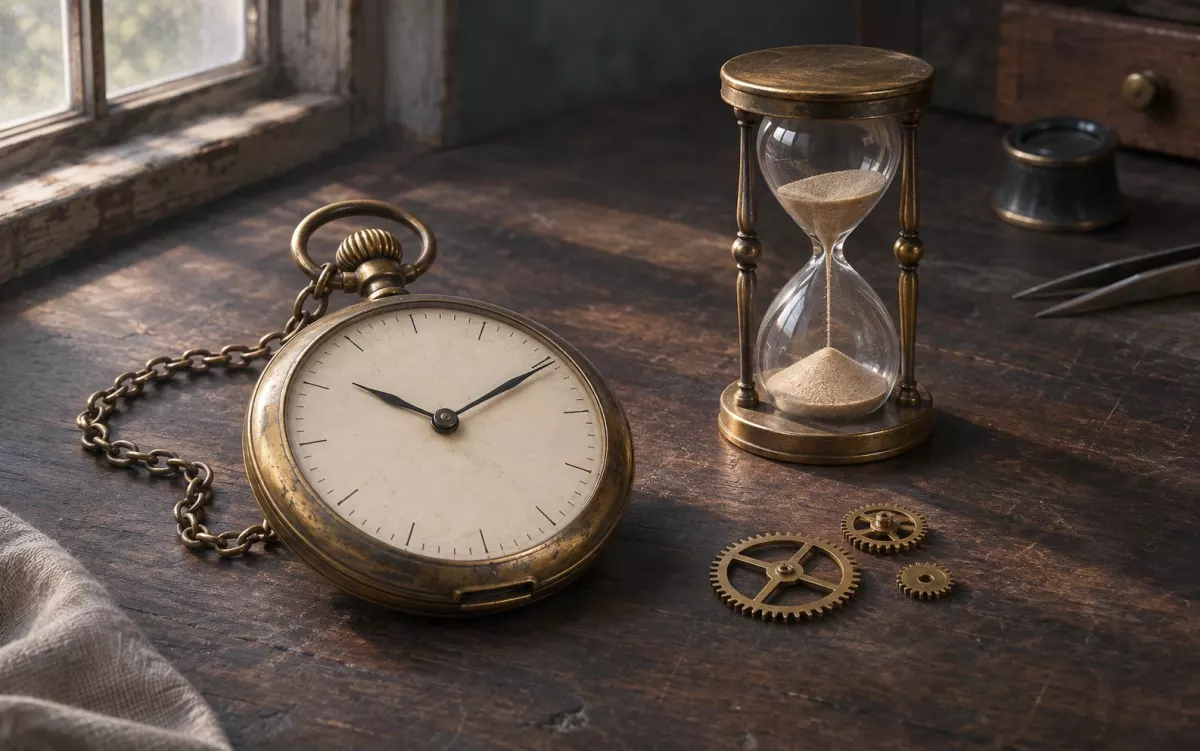
Losing or breaking a watch is not evidence that good or bad luck is coming. Interpretations vary: a missing watch can suggest letting go, while a stopped clock can symbolize stagnation or remembrance. These meanings belong to belief and personal reflection; deciding what to do next depends on whether your watch is missing, out of power, or physically damaged.
Losing a watch: what it means
A watch can mark a graduation, a marriage, or years spent with a relative. Losing it may therefore feel more significant than misplacing another accessory. That personal history explains why you might look for meaning in the loss, but it does not establish a message about your future or erase the occasion the watch commemorated.


Two possible readings point in opposite directions. You might see time slipping away and decide to pay closer attention to your commitments. Alternatively, you might choose to treat the loss as letting go of an old routine. These are personal metaphors, not a universal tradition that labels every lost wristwatch fortunate or unfortunate.
Astrology offers another approach. In horary astrology, practitioners interpret a chart for a specific question, including questions about missing possessions and their recovery. That practice differs from declaring that losing any watch is automatically good or bad. An astrological reading is a belief-based interpretation, not evidence of what caused the loss or a dependable way to locate the object.
Vastu Shastra should not be treated as interchangeable with astrology. Modern Vastu guidance on household clocks addresses their condition and placement in a home. A recommendation about a broken wall clock does not, by itself, establish an omen for a wristwatch lost outside. Chinese clock-giving taboos likewise concern a particular social exchange, rather than every accident involving a watch.


A broken or stopped watch: superstitions and spiritual meaning
One contemporary Vastu interpretation associates a nonworking household clock with stagnation and recommends repairing or removing it. Within that belief, interrupted timekeeping represents stalled progress. The symbolism does not demonstrate that a broken clock causes financial trouble, illness, or relationship problems, and it should not be presented as a diagnosis of someone's life.


Stopped clocks also have a documented connection with mourning. The Smithsonian's collection includes a clock-shaped frame for funeral flowers, explained as a symbol of mortality and of the custom of stopping household clocks after a death. The Antiquarian Horological Society describes deliberately silencing a deceased person's clocks and starting them again after the funeral. Here, people stopped the mechanism as part of a ritual.
That distinction matters when considering stories about watches stopping at the instant someone dies. An intentional mourning custom does not prove that a death can halt a watch remotely. If a family preserves a watch at a particular time as a memorial, its significance comes from that decision; the displayed time alone cannot establish when or why the mechanism stopped.
You can also choose to regard a broken watch as a prompt to reconsider an overfilled schedule or repair something you have neglected. Such a reading is useful only as a voluntary reflection. It does not require you to expect an approaching loss or search for a hidden warning in every mechanical failure.


Is it bad luck to wear a broken watch?
There is no reliable basis for treating a nonworking watch on your wrist as a cause of bad luck. Someone who follows a belief about stagnant time may prefer to put it away, while another person may keep wearing an intact family watch for its association with its former owner. Neither choice predicts what will happen next.
The practical question is what “broken” means. A watch that has simply stopped is different from one with loose glass, a damaged crown, or an unreliable clasp. Cosmetic wear is different again: a scratched case does not mean the movement has failed. Before wearing a damaged watch, have its condition assessed rather than assuming that keeping time is the only measure of whether it is safe to use.


Watches as gifts: superstitions
A Chinese gift-giving taboo rests on a sound association. In Mandarin, 送钟, sòng zhōng, means giving a clock; 送终, also pronounced sòng zhōng, concerns attending to someone at the end of life or their funeral rites. The resemblance can give a clock gift an unwelcome association with death, particularly when the recipient is an older person.
Although the wordplay concerns clocks, accounts of the taboo also include wristwatches. That does not mean every Chinese recipient shares the belief. Ask about the person's preferences before buying, especially for a family occasion where the meaning of a present may matter as much as its usefulness.


One recorded response is to exchange a small coin. The USC Digital Folklore Archives describes a recipient giving a penny, or another small denomination, so the clock is treated symbolically as a purchase rather than a gift. The exchange changes how participants understand the gesture; it is not evidence that money neutralizes a supernatural danger.
If a recipient dislikes watch gifts, choosing something else is straightforward courtesy. If they welcome one, a gift receipt, a suitable fit, and clear instructions will be more useful than an unsolicited explanation of ominous symbolism. There is no reason to introduce a coin ritual unless it is a custom they actually want to follow.
What to do if your watch stops or breaks
Start by identifying the movement from the manual or purchase paperwork. Quartz, solar, and mechanical watches store energy differently, so a stopped display does not point to one universal repair. Note whether the watch stopped after storage, an impact, or contact with water; those details help a service center investigate.
- For a conventional battery-powered quartz watch: an exhausted battery is one possible cause. Have the battery and watch checked by a qualified repairer. If water resistance matters, ask about checking the seals and testing the watch after the case has been opened.
- For a mechanical watch: the mainspring may have used up its stored energy. Follow the model's starting and winding instructions. Many automatic watches can be wound with the crown, but not all can; do not force a crown or assume every movement uses the same procedure.
- For a solar watch: check the charging instructions and any power-saving behavior described in the manual. Some models deliberately stop their hands to conserve energy. Charge under the recommended conditions without overheating the watch, and seek service if it does not recover.
- For cracked or shattered glass: stop wearing the watch, keep it dry, and arrange a repair. Avoid touching loose fragments or trying to glue the crystal in place. A watchmaker should assess the damage before the watch returns to use.
- For repeated stopping or moisture inside: contact the manufacturer or a qualified watchmaker. Explain the symptoms and request an estimate before authorizing work. Repeatedly restarting a watch does not address an underlying fault.

For an heirloom, discuss the proposed work before approving it. Ask which original parts would be replaced and whether they can be returned. You may value preserving a particular dial, engraving, or set of hands more than restoring a new-looking appearance; the repairer needs to know your priorities.
What to do if you lose a valuable watch
Write down the last time and place you definitely had the watch, then retrace the route. Check bags, clothing, bedside storage, and places where you removed it. Contact the relevant hotel, gym, transport operator, or lost-property office with a clear description and your contact details.
- Gather identifying records. Find the model reference, unique serial number, photographs, receipt, and any distinctive engraving. A reference identifies the model, not necessarily your individual watch. If the serial number is missing, ask the selling dealer or a previous service center whether its records include it.
- Report the circumstances accurately. Report suspected theft to local police; for an unexplained loss, check the local lost-property reporting procedure. Keep any report or reference number. Describe what you know without turning an uncertain disappearance into a definite allegation of theft.
- Notify your insurer promptly. Ask what documents and deadlines apply to your policy. Coverage for accidental loss and theft can differ, so do not assume a receipt alone guarantees reimbursement. Retain copies of your correspondence and supporting records.
- Contact the brand or dealer. Ask whether they can record the loss against the serial number. Procedures vary, and a record does not guarantee recovery. A specialist lost-and-stolen-watch database may be another option; check its evidence requirements and fees first.
- Watch relevant listings. Save screenshots, listing addresses, seller details, and dates if you find a possible match. Similar appearance alone is not proof of ownership. Pass the information to the police where theft is suspected, rather than confronting a seller yourself.
For watches you still own, keep identifying photographs and records somewhere separate from the watch box. A picture of the case back and an old service invoice may be more useful in a search than the name of the collection alone.

FAQ
Is losing a watch good or bad luck?
Losing a watch is an unfortunate loss, but it does not reliably predict good or bad events. You can give the experience a personal meaning without treating that meaning as a forecast.
What does losing a watch mean spiritually?
There is no single spiritual meaning that applies to everyone. You might choose to connect it with letting go of an old routine or paying closer attention to your time, while someone else may attach no spiritual significance to it.
Is losing a watch good or bad in astrology?
Losing a watch does not provide a dependable astrological verdict of good or bad luck. Some practitioners use horary charts for questions about missing objects, but their interpretations should not replace searching, reporting a loss, or contacting an insurer.
Is it bad luck to wear a broken watch?
There is no reliable evidence that wearing a stopped watch brings misfortune. Check its physical condition, however: damaged glass or an insecure strap needs attention regardless of what you believe about luck.
Why do watches stop when someone dies?
There is no established reason for a person's death itself to stop a watch. Some stories concern clocks deliberately stopped as a mourning custom; an unexplained stoppage still requires an ordinary examination of the watch and its power source.
Does a broken watch mean a relationship will end?
A broken watch does not establish that a relationship is ending, even if it was a gift from your partner. A fault in the mechanism is not evidence of the giver's feelings or intentions.
Should I throw away a stopped watch?
You do not need to discard a watch because its hands have stopped. Check whether it needs power or repair, then decide whether to restore it, preserve it as a keepsake, or use an appropriate local recycling service.