Best GMT Watches Under $2,000 in 2026
GMT watches display a second time zone using a 24-hour hand, helping travellers, remote workers and anyone with family abroad keep two clocks in view. Below $2,000, the category covers simple quartz watches, conventional automatic GMT movements and more travel-oriented designs with a separately adjustable local hour hand. The nine references below were chosen from manufacturer catalogues and published specifications available in October 2026.
How we chose these watches
- Current models: each reference appears in the brand's current catalogue.
- Budget: US manufacturer list prices or a documented authorised-dealer US retail price must fall below $2,000, excluding promotional discounts.
- GMT type: both caller GMTs (independent 24-hour hand) and traveller GMTs (independent local hour hand) are included.
- Wearability: diameters, thicknesses and, where relevant, lug-to-lug dimensions are weighed alongside water resistance and crystal material.
- Different uses: the selection includes compact quartz watches, field-inspired designs, everyday Swiss automatics and dive-oriented sports models.
Caller GMT versus traveller GMT
GMT watches add a hand that makes one rotation every 24 hours. In a caller GMT, the extra GMT hand is set independently while the conventional hour hand stays linked to the main time display. This layout works well for someone who stays in one city and follows a colleague or family member abroad. The Seiko 4R34, 6R54 and Sellita SW330-2 movements listed below follow this principle.
A traveller GMT instead lets the ordinary local hour hand jump in one-hour increments without interrupting the minutes or reference time; Citizen calibre 9054 provides this arrangement. It is convenient after landing in a different time zone, but neither GMT architecture is automatically more accurate. Rotating 24-hour bezels can allow a third zone to be read, subject to bezel increments and daylight-saving differences.
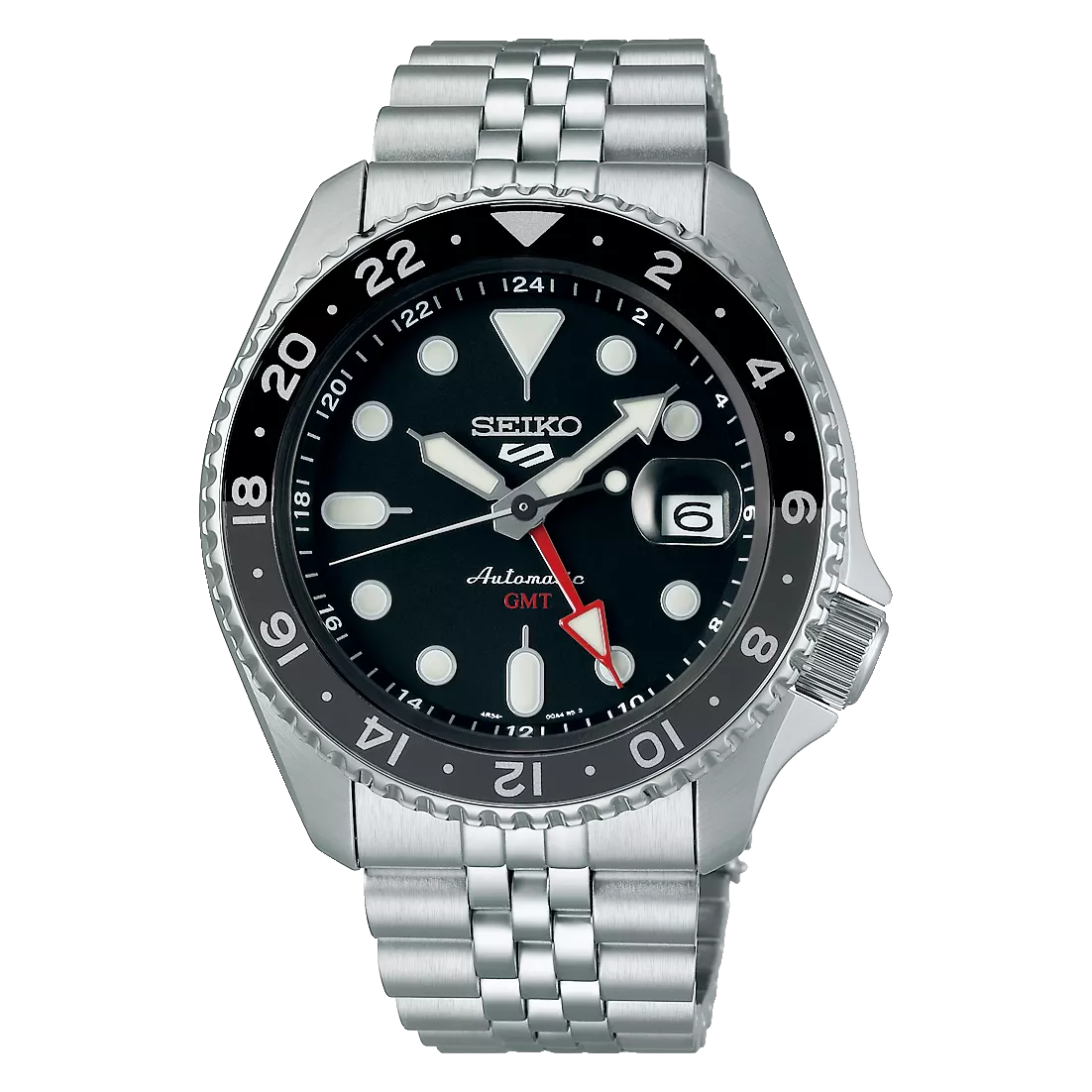
1. Seiko 5 Sports GMT (Ref. SSK001)
The SSK001 brings a mechanical second-time-zone display to Seiko's familiar sports-watch case, pairing a red GMT pointer with a rotating 24-hour bezel and five-row bracelet. Its 4R34 movement independently adjusts the extra GMT hand rather than the conventional local hour hand, a practical layout for checking contacts abroad. The case is 42.5 mm wide but measures only 46 mm from lug to lug. Hardlex glass is a cost compromise compared with sapphire-equipped competitors.
- Case: 42.5 mm diameter, 13.6 mm thick, Stainless steel
- Movement: Seiko 4R34 automatic GMT
- Power reserve: 41 hours
- Water resistance: 100 m
- Crystal: Hardlex with magnifier
- Price: $495 (official US price, October 2026)
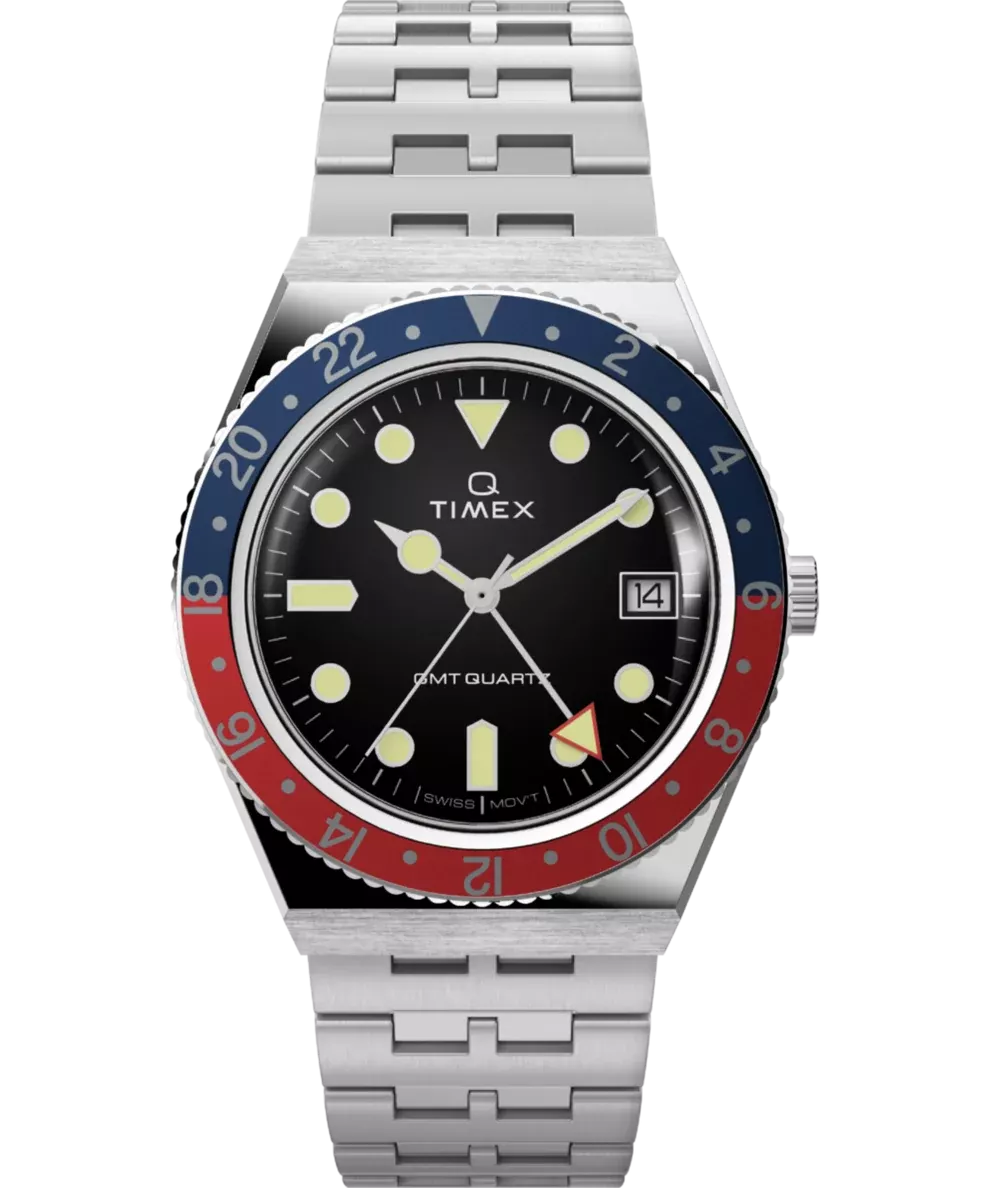
2. Q Timex GMT (Ref. TW2V38000)
The Q Timex GMT offers a second-time-zone hand in a relatively compact 38 mm steel case with a red-and-blue 24-hour bezel. Quartz power means the owner need not keep a mainspring wound, while the design borrows the recognisable case and bracelet silhouette of the Q Timex revival. The acrylic crystal may show scratches sooner than sapphire but can be polished to remove light surface marks. Its 50 m rating makes it more suitable for routine travel than specialist water sports.
- Case: 38 mm diameter, 12.5 mm thick, Stainless steel
- Movement: Battery-powered analog quartz GMT; calibre not specified
- Power reserve: Not applicable (quartz)
- Water resistance: 50 m
- Crystal: Acrylic
- Price: $269 (official US price, October 2026)
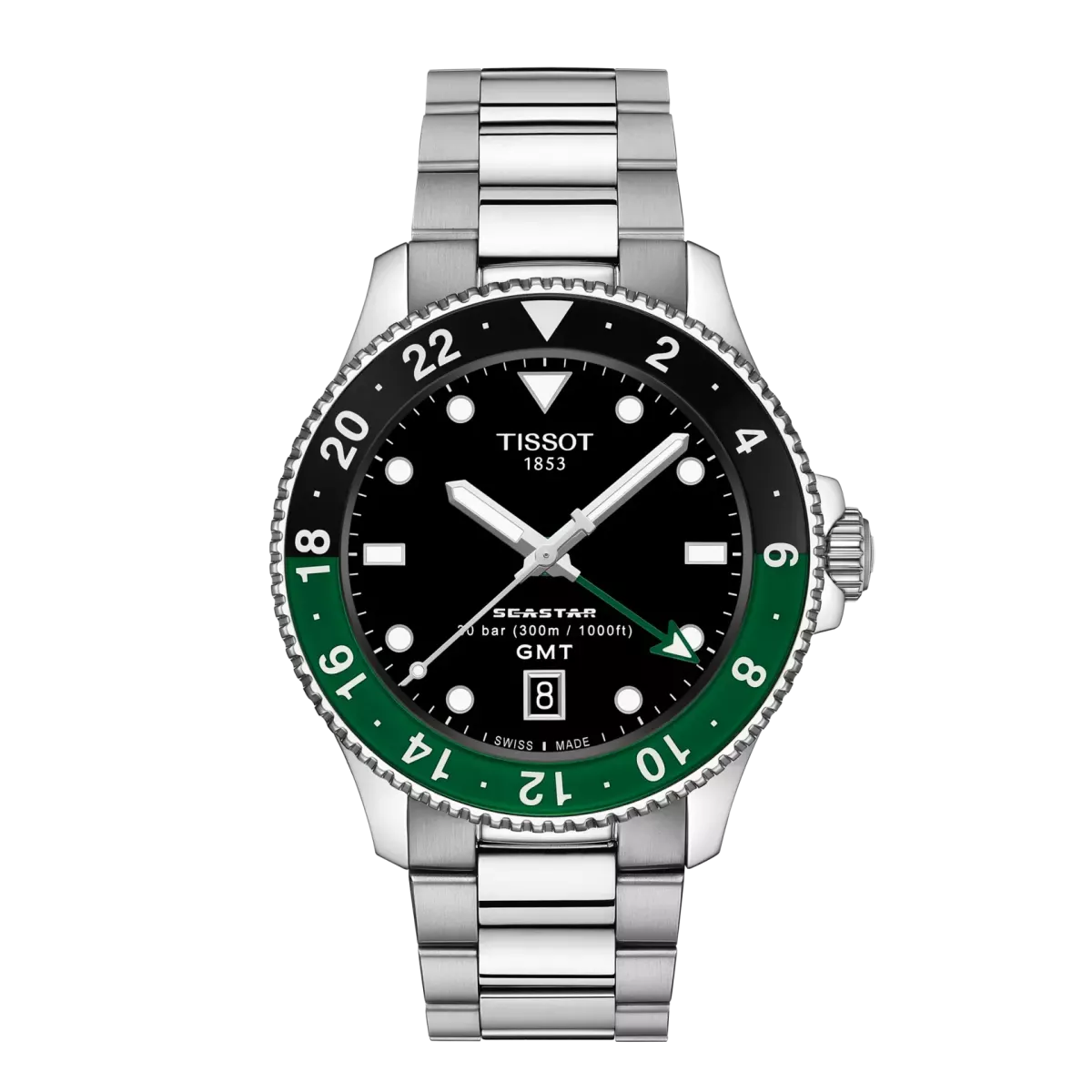
3. Tissot Seastar 1000 GMT Quartz (Ref. T120.852.11.051.00)
The Seastar combines a Swiss quartz GMT display with an unusually substantial 300 m water-resistance rating at this price. A screw-down crown, sapphire crystal and quick-release steel bracelet sit in a 40 mm case only 11.77 mm thick. The black-and-green bezel uses a 24-hour time-zone scale, not the usual 60-minute dive-timer markings. Its movement has a battery end-of-life indicator; anyone seeking a traditional mechanical calibre should instead consider the automatic entries in this list.
- Case: 40 mm diameter, 11.77 mm thick, 316L stainless steel
- Movement: Swiss quartz GMT; calibre not specified
- Power reserve: Not applicable (quartz)
- Water resistance: 300 m
- Crystal: Sapphire
- Price: $575 (official US price, October 2026)
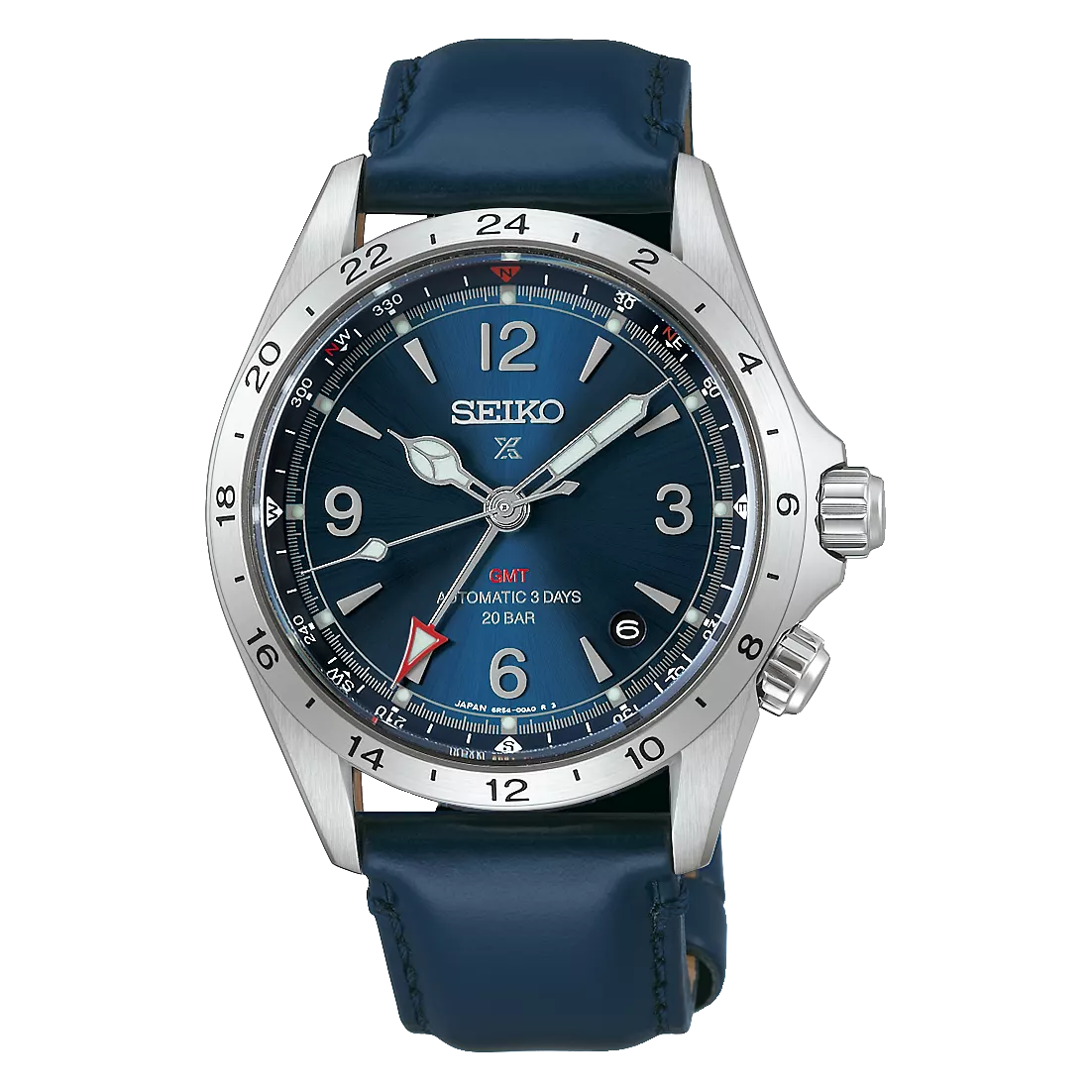
4. Seiko Prospex Alpinist GMT (Ref. SPB377)
This Alpinist GMT exchanges the usual diver styling for a blue dial, leather strap and rotating inner compass ring. A fixed 24-hour bezel works with the red-tipped GMT hand, while the automatic 6R54 gives about three days of running reserve. The 39.5 mm diameter and 46.4 mm lug-to-lug span merit attention from buyers who dislike oversized GMTs, although its 13.6 mm thickness is substantial. The 200 m rating does not make its compass-oriented layout a certified diver.
- Case: 39.5 mm diameter, 13.6 mm thick, Stainless steel with hard coating
- Movement: Seiko 6R54 automatic GMT
- Power reserve: 72 hours
- Water resistance: 200 m
- Crystal: Curved sapphire with inner anti-reflective coating
- Price: $1,150 (official US price, October 2026)
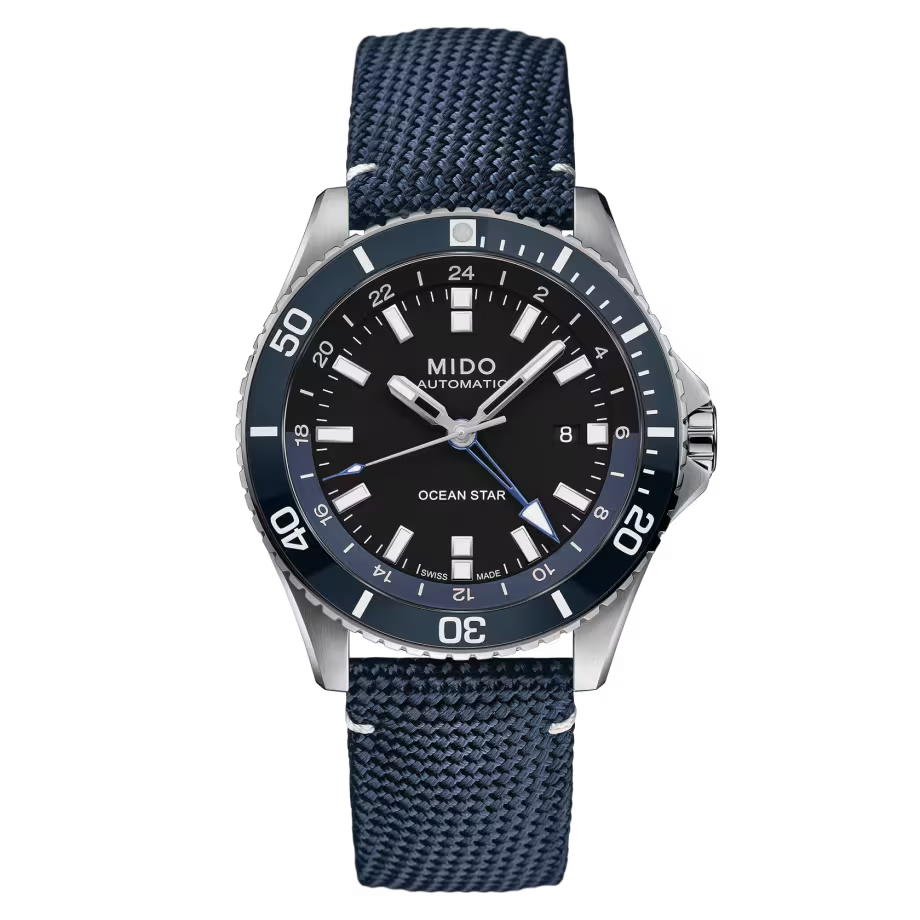
5. Mido Ocean Star GMT (Ref. M026.629.17.051.00)
The Ocean Star GMT combines a 24-hour scale, screw-down crown and 200 m water-resistance rating with Mido's Caliber 80 automatic movement. Its black dial, blue bezel and textured blue strap set it apart visually from bracelet-based models. At 44 mm wide, it is among the largest watches here, so fit deserves special consideration. Mido currently marks this exact reference out of stock on its US site, although US retailers have offered it at the listed $1,410 retail price.
- Case: 44 mm diameter, 13.4 mm thick, 316L stainless steel
- Movement: Mido Caliber 80 automatic GMT
- Power reserve: Up to 80 hours
- Water resistance: 200 m
- Crystal: Sapphire with double-sided anti-reflective coating
- Price: $1,410 (official US price, October 2026)
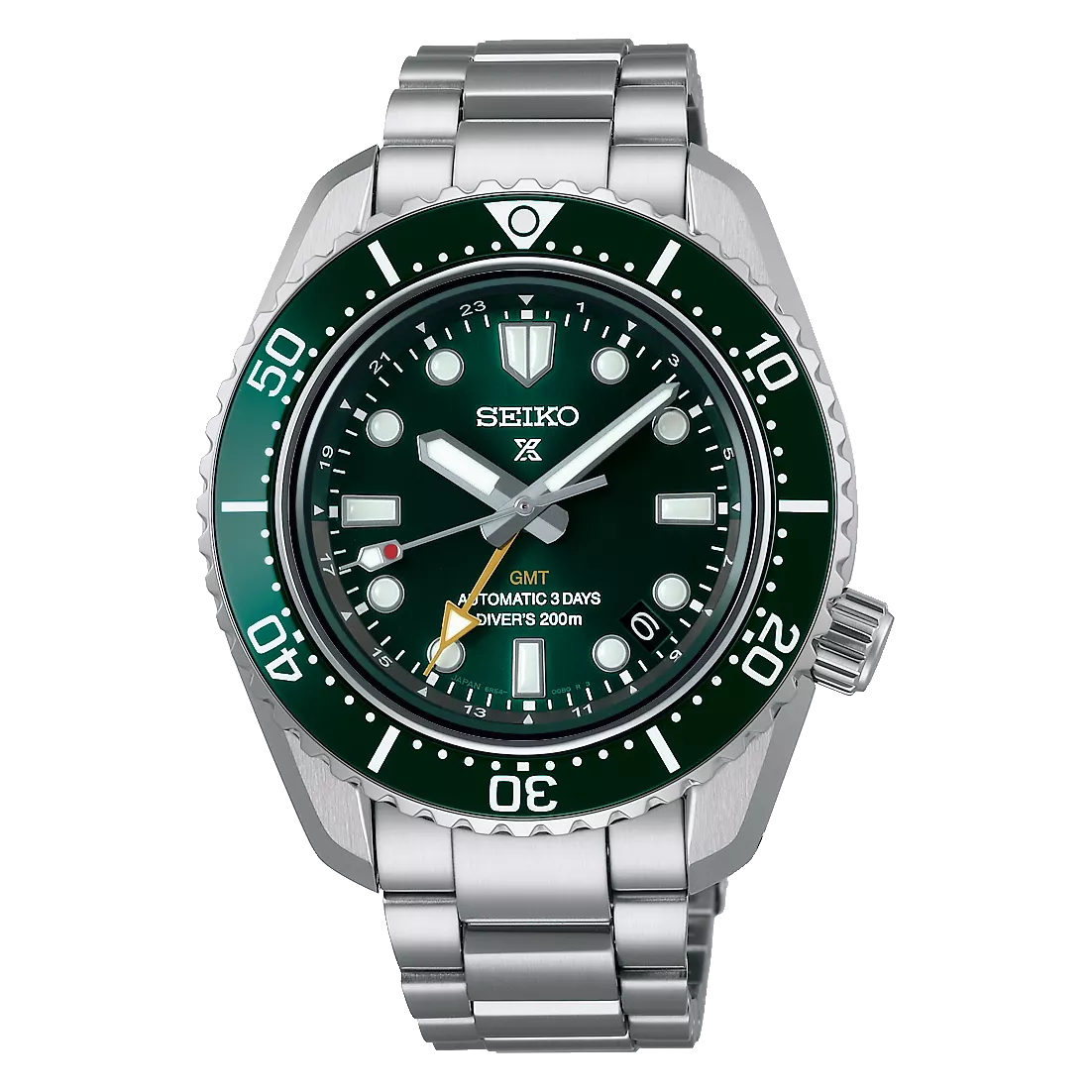
6. Seiko Prospex 1968 Heritage Diver's GMT (Ref. SPB381)
The green-dial SPB381 keeps a proper unidirectional elapsed-time dive bezel instead of replacing it with a rotating GMT scale. A separate 24-hour chapter ring serves the independently adjustable GMT pointer, and the automatic 6R54 provides around 72 hours of reserve. Its 42 mm case is 12.9 mm thick, unexpectedly slimmer than the smaller Alpinist GMT. Seiko explicitly calls its 200 m specification a diver's rating, which is a meaningful distinction from dive-inspired watches with travel-only bezels.
- Case: 42 mm diameter, 12.9 mm thick, Stainless steel with ceramic bezel insert
- Movement: Seiko 6R54 automatic GMT
- Power reserve: 72 hours
- Water resistance: 200 m diver's
- Crystal: Sapphire with inner anti-reflective coating
- Price: $1,500 (official US price, October 2026)
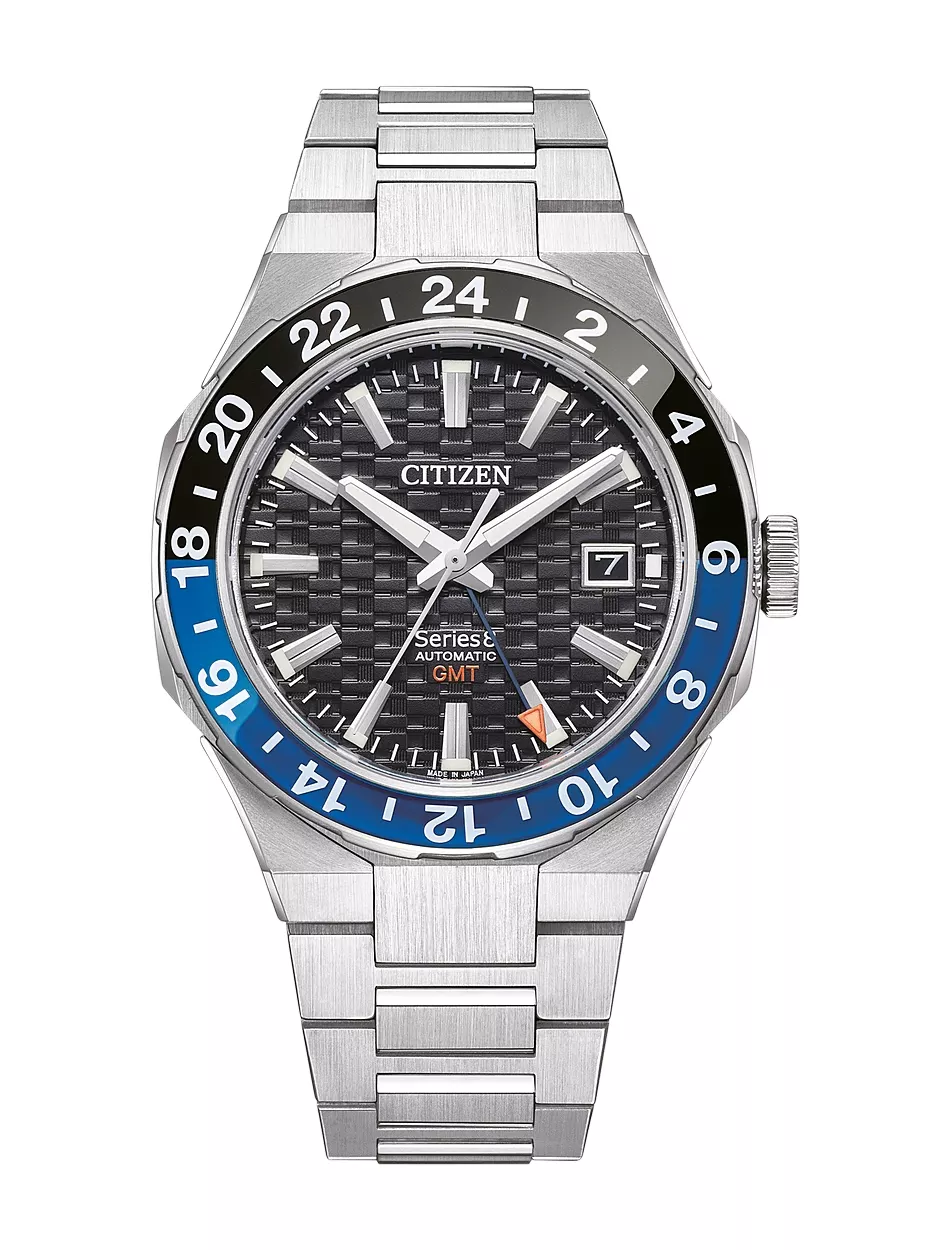
7. Citizen Series8 880 GMT (Ref. NB6031-56E)
Citizen's 9054 calibre is a traveller-style automatic GMT, allowing independent adjustment of the ordinary local hour hand while the reference display continues. That layout is useful when changing time zones during a flight itinerary. The 41 mm Series8 combines angular steel construction with a patterned dial informed by Tokyo's nighttime skyline and Japanese chequer motifs. A rotating black-and-blue 24-hour bezel can assist with an additional zone, while the sapphire crystal and 100 m rating support everyday wear.
- Case: 41 mm diameter, 13.5 mm thick, Stainless steel
- Movement: Citizen 9054 automatic traveller GMT
- Power reserve: 50 hours
- Water resistance: 100 m
- Crystal: Anti-reflective sapphire
- Price: $1,525 (official US price, October 2026)
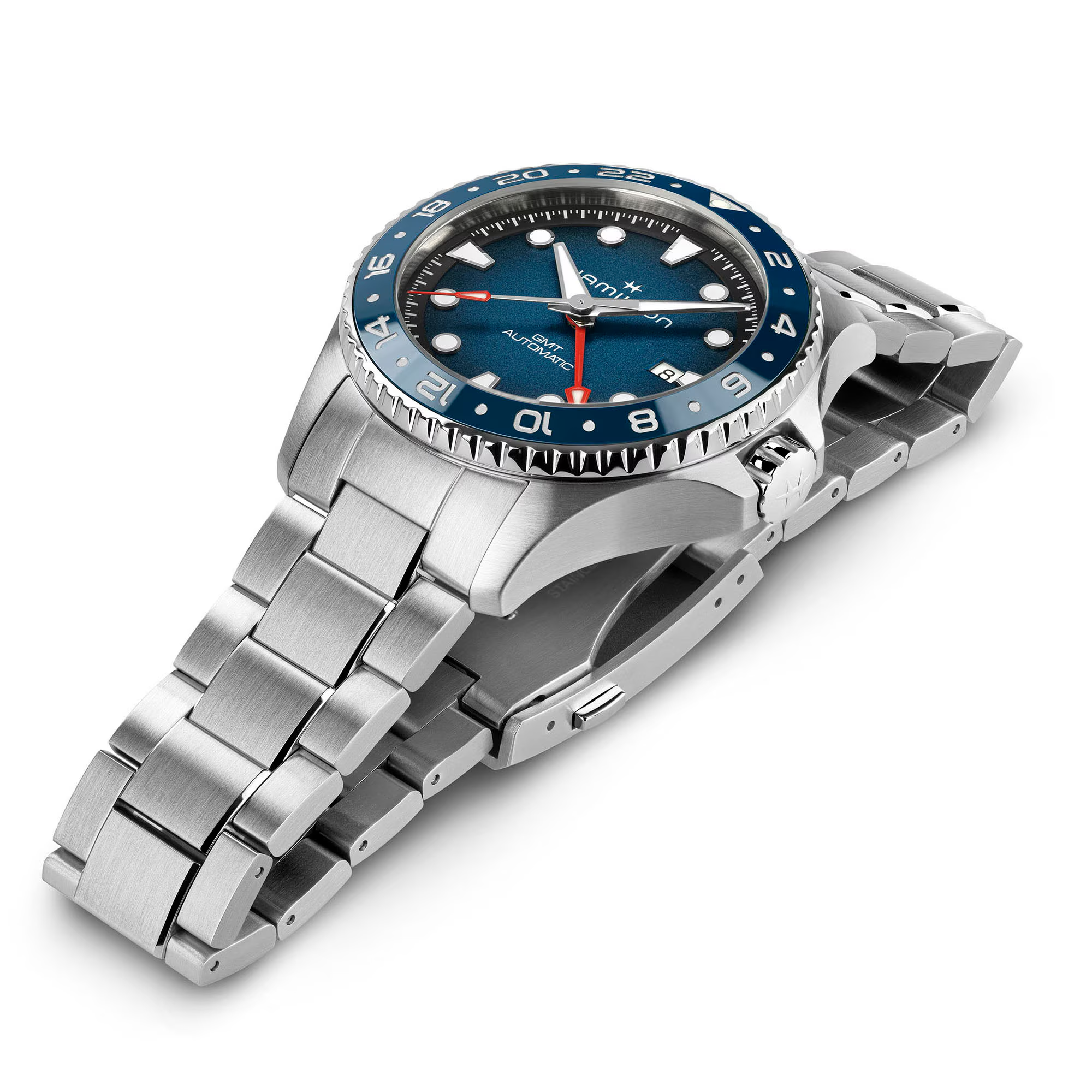
8. Hamilton Khaki Navy Scuba Auto GMT (Ref. H82535140)
The Khaki Navy Scuba Auto GMT combines an 80-hour automatic reserve with sapphire, a ceramic 24-hour bezel and a screw-down crown. Its 300 m rating is attractive for buyers who also spend time around water, although the GMT bezel is not a 60-minute diving timer. The case spans 43 mm across and 52 mm lug to lug, so a wrist-fit check is particularly valuable. Hamilton still lists this blue-dial, steel-bracelet reference as part of its current US collection.
- Case: 43 mm diameter, 13.9 mm thick, Stainless steel
- Movement: Hamilton H-14 automatic GMT
- Power reserve: 80 hours
- Water resistance: 300 m
- Crystal: Anti-reflective sapphire
- Price: $1,525 (official US price, October 2026)
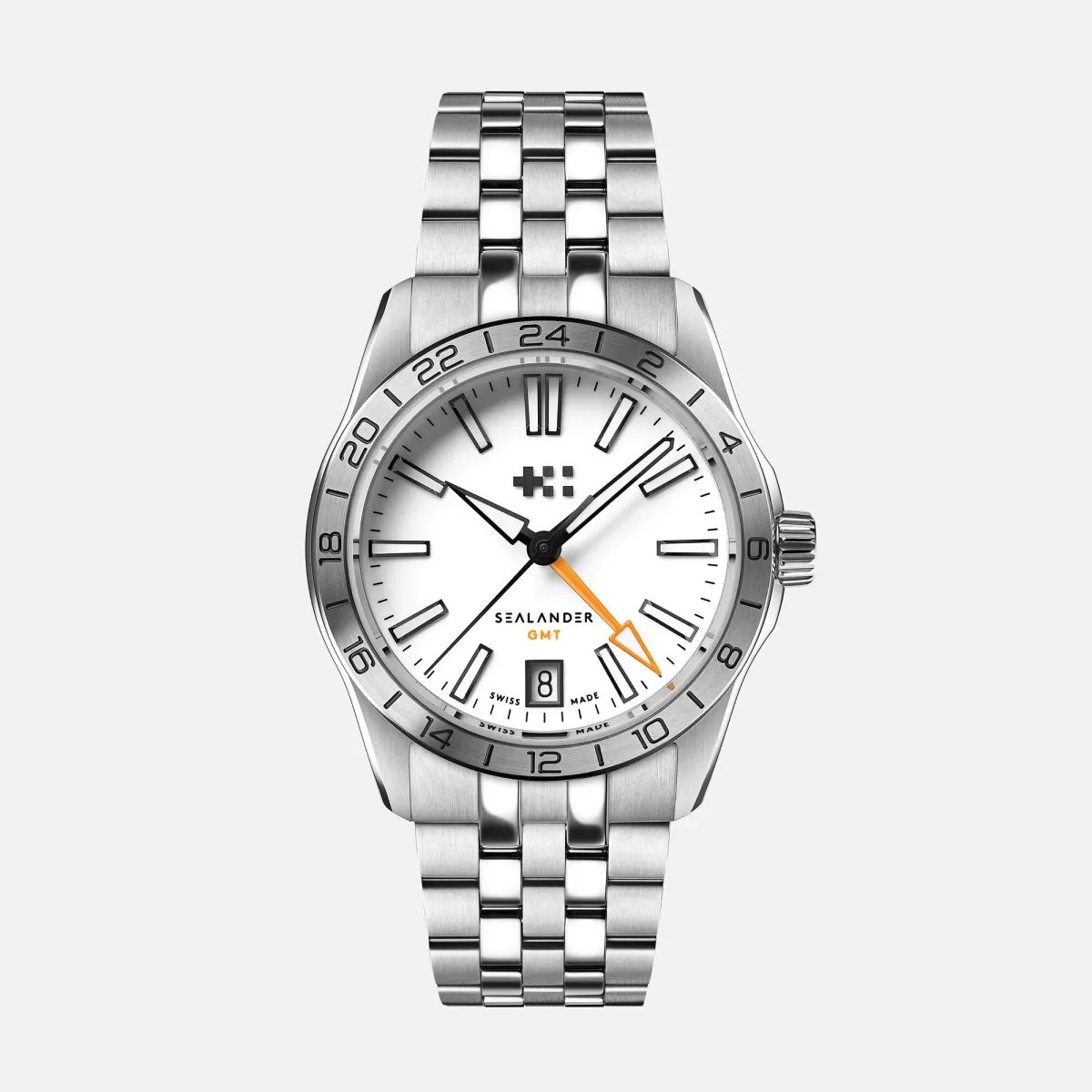
9. Christopher Ward C63 Sealander GMT 36 (Ref. C63-36AGM4-S00W0-B1)
The redesigned 2026 C63 Sealander GMT offers a compact mechanical alternative at just 36 mm across, 11.3 mm thick and 42 mm lug to lug. Its lacquer-white dial, fixed 24-hour bezel and five-link Consort bracelet distinguish it from larger dive-inspired GMTs. The Swiss Sellita SW330-2 independently sets the extra GMT hand, with a typical 56-hour reserve. This precise reference is listed in stock by the manufacturer; its $1,675 US retail figure is corroborated by an authorised seller because the accessible brand page displayed euros.
- Case: 36 mm diameter, 11.3 mm thick, Stainless steel
- Movement: Sellita SW330-2 automatic GMT
- Power reserve: 56 hours typical (50 hours minimum)
- Water resistance: 150 m
- Crystal: Anti-reflective sapphire
- Price: $1,675 (US retail price via authorised dealer, October 2026)
Comparison table
Prices are US list prices checked against current catalogue information for October 2026, not sale prices. Quartz power reserve is not comparable to the running time of a wound mechanical watch. Exact dimensions apply to the references shown, not to every colour or strap variant with a similar name.
| Watch | Size | Movement | Power reserve | Water resistance | Price |
|---|---|---|---|---|---|
| Q Timex GMT (TW2V38000) | 38 mm; 12.5 mm thick | Battery-powered analog quartz GMT; calibre not specified | Not applicable (quartz) | 50 m | $269 |
| Seiko 5 Sports GMT (SSK001) | 42.5 mm; 13.6 mm thick | Seiko 4R34 automatic GMT | 41 hours | 100 m | $495 |
| Tissot Seastar 1000 GMT Quartz (T120.852.11.051.00) | 40 mm; 11.77 mm thick | Swiss quartz GMT; calibre not specified | Not applicable (quartz) | 300 m | $575 |
| Seiko Prospex Alpinist GMT (SPB377) | 39.5 mm; 13.6 mm thick | Seiko 6R54 automatic GMT | 72 hours | 200 m | $1,150 |
| Mido Ocean Star GMT (M026.629.17.051.00) | 44 mm; 13.4 mm thick | Mido Caliber 80 automatic GMT | Up to 80 hours | 200 m | $1,410 |
| Seiko Prospex 1968 Heritage Diver's GMT (SPB381) | 42 mm; 12.9 mm thick | Seiko 6R54 automatic GMT | 72 hours | 200 m diver's | $1,500 |
| Citizen Series8 880 GMT (NB6031-56E) | 41 mm; 13.5 mm thick | Citizen 9054 automatic traveller GMT | 50 hours | 100 m | $1,525 |
| Hamilton Khaki Navy Scuba Auto GMT (H82535140) | 43 mm; 13.9 mm thick | Hamilton H-14 automatic GMT | 80 hours | 300 m | $1,525 |
| Christopher Ward C63 Sealander GMT 36 (C63-36AGM4-S00W0-B1) | 36 mm; 11.3 mm thick | Sellita SW330-2 automatic GMT | 56 hours typical (50 hours minimum) | 150 m | $1,675 |
What to look for in a GMT watch
Choose the appropriate GMT adjustment
Flyer-style local-hour adjustment is convenient when crossing time zones often. An independently set 24-hour pointer can be enough for checking an overseas office from home. Marketing names are inconsistent, so check which hand actually changes on its own rather than relying on "true GMT" claims.
Study the markings around the dial
A movable 24-hour bezel can assist with a third zone; a fixed one cannot be repositioned. A separate 60-minute elapsed-time bezel serves a different purpose and matters for diving. The Seiko SPB381 combines a dedicated dive bezel with an inner 24-hour GMT scale.
Look beyond case diameter
The 39.5 mm Alpinist is 13.6 mm thick, while the 42 mm SPB381 diver is 12.9 mm thick. Lug-to-lug span also changes wrist fit: the Hamilton reaches 52 mm, compared with just 42 mm for the 36 mm Christopher Ward. Crystal choice affects scratching: sapphire is more resistant, whereas acrylic can be polished when marked.
Match resistance and ownership costs to real use
A 300 m rating is not a requirement for air travel, and a 24-hour GMT bezel cannot replace a proper dive-minute timer. Always follow published manufacturer instructions for water use and crown operation. Quartz avoids routine winding but needs battery changes; automatics need winding and eventual servicing. Retail prices exclude sales tax and may differ from the checkout total.
Which GMT should you choose?
The Seiko SSK001 offers an economical entry to automatic GMT watches; the smaller Timex Q prioritises quartz convenience. Tissot brings sapphire and 300 m resistance to a slimmer quartz design. The Citizen Series8 stands apart with a jumping local hour hand, whereas Christopher Ward supplies a compact 36 mm Swiss automatic. For water-oriented use, Hamilton offers a long reserve and a substantial water rating, while Seiko SPB381 retains the elapsed-time dive bezel.
FAQ
What does GMT mean on a watch?
GMT means Greenwich Mean Time. In watch descriptions it usually refers to an extra hand making one rotation every 24 hours, used for a second time-zone display. The label does not identify which hand can be adjusted independently.
What is the difference between caller and traveller GMT?
A caller GMT independently adjusts the 24-hour hand. A traveller GMT independently adjusts the conventional local hour hand while minutes and reference time keep running. Travellers may value the latter; both designs show two zones.
Is the Seiko SSK001 a good first automatic GMT?
It is an accessible entry point at the $495 US list price, using the Seiko 4R34 movement and an adjustable 24-hour bezel. Check its 42.5 mm diameter, 13.6 mm thickness and Hardlex crystal before buying.
Can a GMT watch track three time zones?
Some can: the ordinary hands show local time, the GMT hand shows a reference time and a rotating 24-hour bezel can be aligned with another city. Fractional-hour offsets may not be represented precisely.
Is a quartz GMT worse than an automatic GMT?
No. Quartz watches are often easier to leave unworn without needing to reset them, while automatics appeal for mechanical construction and winding. The useful comparison is hand-setting behaviour, case specification and cost, not movement prestige.
Do GMT watches need 200 m water resistance?
Not for their time-zone function. Choose a rating based on intended water exposure, maintaining seals and following manufacturer instructions. A GMT bezel is not necessarily an elapsed-time dive bezel.